Personalized Medical Care & Dedicated International Patient Concierge


Memory Loss / Dementia · Needs Clinic Confirmation
Forgetfulness
Forgetfulness is one of the most common concerns brought to psychiatric clinics — and one of the most anxiety-provoking, given the fear of what it might signal.
Schedule a Consultation
What Is Forgetfulness — And When Should It Be Assessed Professionally?
The human brain registers, stores, and retrieves mental impressions in a continuous cycle — and this cycle changes with age. From the third decade of life onward, the brain gradually atrophies, and memory is inevitably affected by this natural process. Forgetting where you placed your keys, struggling to recall a name, or losing track of a word mid-sentence are experiences most adults recognize — and for many people, they represent nothing more than the normal effects of aging, stress, or an overloaded mind.
But forgetfulness is not always simply a product of aging. It can also be a symptom of something that deserves clinical attention — anxiety, depression, chronic stress, or in some cases the early signs of a more significant cognitive condition. Knowing which of these is driving the memory lapses a person experiences is the essential question — and it is one that a thorough psychiatric assessment is uniquely equipped to answer.
Forgetfulness, clinically defined, is a simple memory disorder without impairment of other cognitive functions. It is caused by a combination of neurological factors related to aging and emotional or psychological influences — most notably anxiety, depression, and sustained stress, all of which reduce concentration and produce temporary memory difficulties. In these cases, what appears to be a memory problem is more accurately a concentration problem. The memory itself may be intact; the difficulty lies in the ability to attend, register, and retrieve under conditions of psychological load.
This distinction — between true memory impairment and concentration-mediated forgetfulness — is clinically critical and practically reassuring. At Samsung Gonggam Psychiatry Clinic, forgetfulness assessment begins by establishing exactly which of these patterns is present.
Who Needs a Professional Forgetfulness Assessment?
Forgetfulness is one of the most common concerns brought to psychiatric clinics — and one of the most anxiety-provoking, given the fear of what it might signal. Professional evaluation is strongly advisable if you recognize yourself in any of the following:
- Adults experiencing frequent memory lapses that feel beyond ordinary absent-mindedness — forgetting appointments, names, or where items were placed with a frequency that is causing concern or disrupting daily life
- Those who notice memory difficulties worsening during periods of high stress, anxiety, or low mood — and who want to understand whether a psychiatric condition is contributing to their cognitive symptoms
- People currently experiencing anxiety or depression in whom memory and concentration difficulties are a significant feature — and for whom it is unclear whether cognitive symptoms reflect the psychiatric condition or something additional
- Adults who are worried about dementia — who have noticed memory changes and want a professional assessment to determine whether what they are experiencing is within the range of normal aging, stress-related forgetfulness, or something that requires further investigation
- Those whose concentration difficulties are affecting work or daily functioning — making errors, missing information, or struggling to complete tasks that were previously routine
- Family members concerned about an older relative whose forgetfulness seems to be increasing — and who want professional guidance on whether the changes they are observing are cause for concern
- Adults in their 50s and 60s who want a baseline cognitive assessment as a proactive measure — establishing a reference point for monitoring cognitive health over time
- Anyone who has been dismissing memory concerns for an extended period and who recognizes that professional clarity — whatever it reveals — would be more useful than continued uncertainty
Meet the Specialists in Forgetfulness and Memory Assessment
|
|
Dr. Hyunwook Cho MD MSc. Medical Doctor, | Dr. Soohyun Chae MD MSc. Medical Doctor, |


Dr. Cho Hyunwook — Representative Director
Dr. Cho Hyunwook holds a Master of Medicine from Sungkyunkwan University and completed his psychiatric residency at Samsung Seoul Hospital. As Adjunct Professor in the Department of Psychiatry at Samsung Seoul Hospital, he brings academic-level clinical expertise directly into outpatient practice. His career spans military psychiatry as Chief of Psychiatry at the ROK Armed Forces Military Hospital in Hongcheon, clinical directorship at Seoul Myeong Hospital, and private practice leadership at Haesol Psychiatry Clinic in Incheon.
A Full Member of the Korean Neuropsychiatric Association and Korean Association for Analytic Psychotherapy, and Lifetime Member of the Korean Academy of Child and Adolescent Psychiatry, Dr. Cho brings extensive experience in the differential assessment of memory concerns — distinguishing psychiatric, age-related, and cognitive contributions with precision and providing patients with clear, grounded clinical understanding of their situation.
Dr. Chae Soohyun — Director
Dr. Chae Soohyun graduated from Seoul National University College of Medicine and completed her internship and psychiatric residency at Seoul National University Hospital. A current PhD Candidate in Medicine at SNU, she brings active research engagement alongside clinical experience at the Seoul Sunflower Center and public mental health leadership as Doctor-in-Charge for Mokpo City.
Her specializations in child and adolescent psychiatry and women's mental health are relevant to forgetfulness assessment — memory and concentration difficulties are common features of hormonal transitions, perinatal periods, and life-stage changes that affect women distinctly. A Full Member of the Korean Neuropsychiatric Association and Korean Academy of Child and Adolescent Psychiatry, Dr. Chae approaches memory concerns with both clinical precision and genuine sensitivity to the anxiety they typically generate.
Both psychiatrists share the clinic's founding commitment to Gonggam (공감) — empathy — ensuring that every patient presenting with memory concerns is met with the understanding, patience, and clinical care the situation deserves.
Forgetfulness Assessment: What the Process Addresses
- Identifying the Cause of Memory Lapses: The primary goal of forgetfulness assessment is establishing an accurate clinical explanation for the memory difficulties the patient is experiencing. Is forgetfulness driven by anxiety reducing concentration? By depression diminishing cognitive engagement? By the natural effects of aging? Or by early cognitive change that warrants further monitoring? Each of these has a different clinical pathway, and accurate identification at the assessment stage ensures that the response is proportionate, appropriate, and genuinely useful. Individual results vary and no specific outcome is guaranteed.
- Treating Contributing Psychiatric Conditions: Where forgetfulness is being driven or significantly worsened by anxiety, depression, or chronic stress, treatment of the underlying psychiatric condition is the most direct route to memory improvement. As anxiety reduces and concentration recovers, or as depression lifts and cognitive engagement returns, the memory difficulties associated with them typically improve correspondingly. This is one of the most clinically reassuring findings of forgetfulness assessment — and one that treatment at Samsung Gonggam Psychiatry Clinic is well positioned to act on. Results are individual and timelines vary.
- Distinguishing Forgetfulness from Early Cognitive Decline: Where assessment identifies features that suggest early cognitive change rather than — or in addition to — psychiatric contributors, clinical guidance and appropriate monitoring are provided. The distinction between forgetfulness and early dementia is made carefully and communicated clearly — giving patients and families the accurate information they need to make informed decisions about ongoing care and monitoring.
- Practical Guidance and Reassurance: For many patients, the most valuable outcome of a forgetfulness assessment is clarity. Understanding that memory lapses are being driven by anxiety or stress — and that addressing those conditions will improve memory — is both clinically actionable and personally reassuring. Practical guidance on concentration, stress management, sleep, and the lifestyle factors that support cognitive health is provided as a structured component of every forgetfulness assessment.
The Forgetfulness Assessment and Care Process

1. Initial Psychiatric and Memory Consultation: Your first appointment is a comprehensive, unhurried evaluation of your memory concerns, cognitive history, current psychiatric health, stress levels, and daily functioning. Your psychiatrist explores the full picture — when memory lapses began, how they present, what situations worsen them, and how they are affecting your daily life and confidence.
2. Differential Assessment: A structured evaluation differentiates between age-related memory change, psychiatric conditions contributing to concentration and memory difficulties, and features that may suggest early cognitive decline. This differential process is the clinical heart of forgetfulness assessment — and its accuracy directly determines the usefulness of everything that follows.
3. Individualized Care Planning: Your care plan is developed based on assessment findings. Where psychiatric conditions are identified as contributing factors, treatment addresses these directly — with the expectation that memory and concentration will improve as the underlying condition resolves. Where monitoring of cognitive health over time is indicated, a structured follow-up schedule is established.
4. Treatment of Contributing Conditions: Anxiety, depression, and stress-related cognitive symptoms are treated through individualized psychiatric care — pharmacological management where clinically appropriate, alongside practical strategies for concentration, stress regulation, and sleep. These interventions address the conditions driving forgetfulness at their source.
5. Ongoing Review and Monitoring: Follow-up appointments review the impact of treatment on memory and concentration, monitor for any changes in cognitive profile over time, and provide the ongoing clinical support that memory concerns — whatever their cause — benefit from having.
Results, Safety, and What to Expect
Where forgetfulness is driven by anxiety, depression, or stress, meaningful improvement in concentration and memory is achievable through treatment of the underlying condition. Individual timelines vary — some patients notice improvement relatively quickly, while for others progress is more gradual — and realistic expectations are established clearly during the initial consultation.
Where monitoring of cognitive health is indicated, the assessment process itself is non-invasive and low-risk. Treatment for contributing psychiatric conditions is conducted carefully, with full discussion of options and monitoring throughout. No specific outcome can be guaranteed, and individual results differ. Samsung Gonggam Psychiatry Clinic commits to a process that is transparent, clinically grounded, and genuinely attentive to both the cognitive and emotional dimensions of memory concerns.
Real Patient Experiences: Forgetfulness Assessment at Samsung Gonggam Psychiatry Clinic
"I was convinced something was seriously wrong — it turned out to be anxiety" — Office Professional, Early 40s
This patient came to Samsung Gonggam Psychiatry Clinic convinced that his increasing forgetfulness — losing track of conversations, missing appointments, struggling to retain information — signaled something neurologically significant. A comprehensive assessment identified severe anxiety as the primary driver, reducing his concentration to the point where memory registration was genuinely impaired. Treatment of the anxiety produced a progressive improvement in both concentration and memory that he described as returning to himself.
"I needed to know whether what I was experiencing was normal" — Retired Professional, Mid-60s
After several months of increasing forgetfulness — forgetting names, misplacing items, losing track of conversations — this patient sought assessment primarily for reassurance. A thorough cognitive evaluation confirmed age-related memory change without features of early dementia, alongside a mild depressive episode contributing to concentration difficulties. The clarity of the assessment and the treatment of her depression produced both memory improvement and significant relief.
Why Choose Samsung Gonggam Psychiatry Clinic for Forgetfulness Assessment?
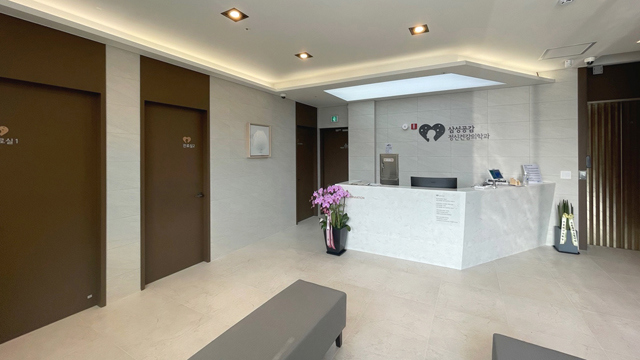
Forgetfulness assessment requires both diagnostic precision and the kind of genuine empathy that acknowledges how anxiety-provoking memory concerns can be. At Samsung Gonggam Psychiatry Clinic, board-certified psychiatrists trained at Samsung Seoul Hospital and Seoul National University Hospital provide the clinical accuracy and personal sensitivity that effective memory assessment demands.
- Accurate differential diagnosis — distinguishing age-related forgetfulness, psychiatric contributors, and early cognitive change with clinical precision
- Treatment of contributing psychiatric conditions — addressing anxiety, depression, and stress as direct drivers of memory and concentration difficulties
- Practical cognitive guidance — evidence-based recommendations for concentration, sleep, and lifestyle factors supporting memory health
- Stigma-free, empathy-led care grounded in Gonggam (공감) — for patients carrying the weight of memory concerns that deserve to be taken seriously
Clarity About Your Memory Starts With One Consultation
If memory lapses have been causing concern — whether for yourself or someone you care about — professional assessment provides the clarity, direction, and peace of mind that uncertainty cannot. At Samsung Gonggam Psychiatry Clinic, the first step is a thorough consultation with a board-certified psychiatrist who will assess your memory concerns carefully and provide the honest, compassionate clinical guidance you deserve.
[Book Your Forgetfulness Assessment at Samsung Gonggam Psychiatry Clinic]
Contact our clinic today to schedule your consultation. Same-week appointments are available and no referral is required. You will be connected directly with our appointment team to find a time that works for you.
Other Services
Explore additional treatments offered by our specialists.

Alcohol Use Disorder
The term alcoholism is widely used but clinically imprecise.
Learn More

Stress Management
Stress is the physical and mental response that occurs when a person feels that what they are facing exceeds their capacity to cope.
Learn More

Binge Eating / Obesity
Binge eating and stress-related obesity are conditions where the psychological dimension is not secondary to the clinical picture — it is central to it.
Learn More